

Introduction
Winnipeg summers already run short. You finally have the patio furniture out, the grill fired up, and the weekend blocked off for the family. Then a swarm of yellow jackets descends on every plate, every drink, and every bare arm at the table-turning what should be a relaxing afternoon into a problem that often requires Residential pest control to resolve.
This wasn’t happening in June. What changed?
Everything. August transforms yellow jackets from background insects into relentless, sugar-hunting aggressors, and your backyard barbecue sits directly in their flight path. The frustration runs deep: you’ve earned these few weeks of outdoor living, and a colony of aggressive wasps August Winnipeg patios attract keeps stealing them from you.
Here’s what Winnipeg homeowners who reclaim their yards do differently. They stop swatting and start understanding why these wasps behave this way, and they act before the weekend, not after.
The Science Behind August Aggression: Why Yellow Jackets Turn Hostile
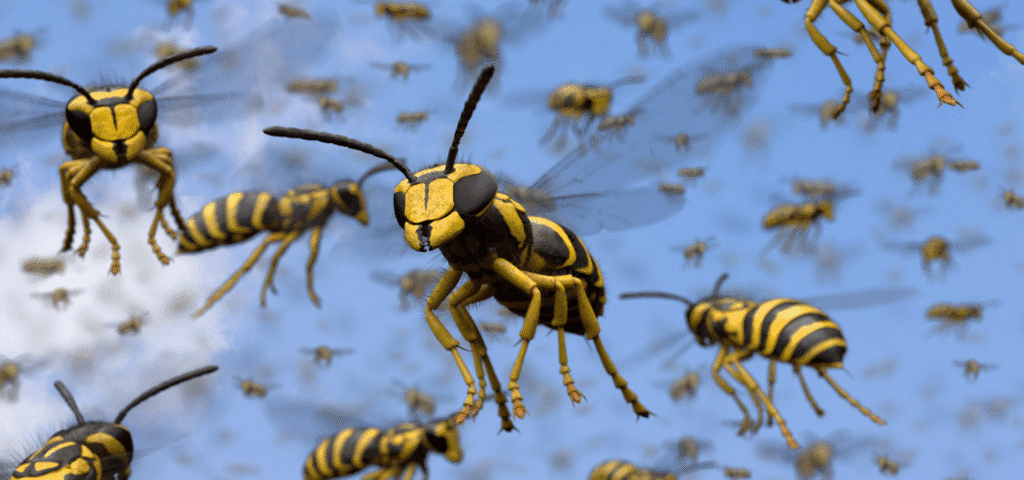
Yellow jackets don’t wake up angry. Their late-summer aggression follows a biological schedule that repeats every single year.
The Colony Life Cycle Explains Everything
In spring, a single queen emerges from winter dormancy and builds a nest alone. She lays eggs, raises her first brood of sterile female workers, and hands off all duties once those workers mature. From June through July, the workers stay laser-focused on one job: hunting protein-rich insects, caterpillars, flies, and beetle larvae to feed the colony’s growing larvae.
During this phase, yellow jackets largely ignore your patio. They have work to do.
Then August arrives. The queen slows her egg production. She produces her final brood of fertile males and new queens that will mate and overwinter. With fewer larvae to feed, the workers suddenly have no purpose. No protein runs. No nest-building duties. No larvae demanding food.
The Royal Ontario Museum describes this shift as the original “empty nest syndrome.” Workers now forage freely for themselves, and their adult diet is high in sugar. Your lemonade, burger buns, open beer cans, and fruit platters become irresistible targets-one of the most common late-summer issues homeowners ask Progressive Pest Management about.
A colony that reached peak size, potentially thousands of workers by late summer (The Canadian Encyclopedia), now deploys all those workers toward your table instead of toward the nest.
That explains the swarm. The aggression follows naturally. Workers no longer invest in colony survival. They defend themselves individually, sting more readily, and release alarm pheromones when threatened. The City of Edmonton’s pest control resources confirm that a single crushed yellow jacket sends a chemical distress signal that draws aggressive reinforcements from nearby.
Where Nests Hide: The Three Locations Winnipeg Homeowners Miss
You cannot solve a yellow jacket problem by swatting at the table. You solve it at the nest. But finding the nest demands knowing where these species build.
Underground Nests
The common yellow jacket (Vespula alascensis), the dominant nuisance species across the Prairies, nests primarily below ground. Old rodent burrows, gaps beneath landscape timbers, spaces under concrete slabs, and edges of sidewalks all serve as entry points.
Removing a wasp nest underground ranks among the most dangerous DIY tasks a homeowner can attempt. The nest entrance often sits at ground level in high-traffic areas, garden beds, lawn edges, or directly beside a patio. Step too close, and the colony erupts. Underground nests also make visual detection nearly impossible until someone gets stung.
Wall Cavity Nests
The German yellow jacket (Vespula germanica), considered the most aggressive species in Canada by Health Canada, targets wall voids, attics, and gaps behind siding. A yellow jacket nest in the Winnipeg homes’ harbour often starts at a tiny gap around a vent, soffit, or window frame.
These nests grow silently inside the wall cavity. You hear faint buzzing. You noticed wasps entering and exiting a small hole on the exterior. By August, the colony behind that wall may number in the thousands.
Wall nests demand professional removal. Spraying the entrance hole agitates wasps, driving them deeper into the wall and potentially into your living space through light fixtures, outlets, and gaps in the drywall.
Aerial Nests
The aerial yellow jacket (Dolichovespula arenaria) and the bald-faced hornet (Dolichovespula maculata) build the visible paper nests you spot hanging from eaves, tree branches, and deck overhangs. These nests grow throughout the summer and become impossible to ignore by August.
Aerial nests present the most obvious visual cue, but their exposed position makes disturbing them extremely risky. A threatened aerial colony launches coordinated defence workers to fly directly at the perceived threat and sting on contact.
Best Time to Spray Wasp Nest: Manitoba Homeowners Need to Know
Timing determines whether a treatment succeeds or triggers a dangerous confrontation.
Early Season vs Late Season
The best time to spray a wasp nest in Manitoba properties runs from late spring through early summer when the queen operates alone or with only a small number of workers. A nest with a dozen occupants in June presents a fundamentally different challenge than a nest with several thousand in August.
By August, the window for easy removal has closed. The colony reached its peak population. The workers already shifted into their aggressive late-season behaviour. Every day you wait adds more stinging defenders to the problem.
Time of Day Matters
Professional pest control technicians treat nests at dusk or after dark. Workers return to the nest as temperatures drop, concentrating the colony at a single location. Daylight treatments catch only a fraction of the workers; the rest return to a disturbed nest and become dangerously aggressive.
Temperature Matters
Cool evenings slow yellow jacket activity. Warmer nights keep them alert and reactive. A technician who understands local conditions chooses the optimal treatment window that maximizes effectiveness while minimizing risk.
Mistakes That Make Yellow Jacket Problems Worse
Understanding the cost of failure in wasp nest removal in Winnipeg helps explain why shortcuts backfire.
Mistake #1: Spraying the entrance of a wall nest with store-bought aerosol. The spray kills the guards at the entrance. The rest of the colony, potentially thousands of workers, panic, scatter, and find alternative exits. Those exits often lead directly into your home through interior gaps. You now have agitated yellow jackets inside your kitchen.
Mistake #2: Pouring boiling water or petrol into a ground nest. This enrages the colony without eliminating it. Survivors attack anything nearby. The nest entrance may shift to a new location, making professional treatment harder.
Mistake #3: Sealing the entrance hole. Yellow jackets chew through caulking, expanding foam, and soft materials within hours. If they cannot exit through the original hole, they will bore new paths, including paths into interior walls and living spaces.
Mistake #4: Swatting wasps near the nest. A crushed yellow jacket releases alarm pheromones that trigger a mass defensive response. One swat can escalate a nuisance into a medical emergency, especially for anyone with a wasp venom allergy. Health Canada notes that wasp stings produce severe allergic reactions in some individuals that require immediate medical attention.
Mistake #5: Waiting until “the cold kills them.” Winnipeg’s first hard frost eventually kills the colony. But August, September, and early October stretch across the most valuable weeks of Manitoba’s outdoor season. Waiting means surrendering your patio for the remainder of the summer. The wasp nest removal Winnipeg cost always weighs less than losing every weekend to a nest you chose to tolerate.
Your Weekend Action Plan: Reclaim Your Patio Before Saturday
The barbecue is three days away. The yellow jackets own your backyard. Here’s how to take it back.
Step 1: Locate the nest. Watch the flight pattern. Yellow jackets travel in a direct line between food sources and the nest. Follow returning wasps from your patio at a safe distance. Look for ground-level entry points in lawn edges, garden beds, and along foundations. Check exterior walls for wasps entering through gaps around vents, soffits, and window frames: scan eaves, tree branches, and deck overhangs for visible paper nests.
Step 2: Assess the risk honestly. A small aerial nest in early summer? You might remove it yourself at dusk, wearing proper protective clothing. A ground nest beside the patio with heavy traffic? A wall nest with thousands of occupants? A nest anywhere near children or someone with a sting allergy? Call a professional. The risk of mass stings from a disturbed August colony far outweighs any savings from a DIY approach.
Step 3: Call for same-day emergency removal. A licensed pest control technician arrives with the equipment, protective gear, and treatment products that eliminate the colony at the source, not just the scouts at your table. Professional treatment targets the nest directly, treats at the optimal time, and removes or neutralizes the colony before your next outdoor gathering.
Step 4: Reduce attraction for the rest of the season. After removal, keep sugary drinks covered. Clear food from outdoor tables immediately after eating. Seal rubbish bins tightly. Pick up fallen fruit from trees. Remove standing water sources. These steps reduce scouting activity from neighbouring colonies that may still patrol your area.
Step 5: Schedule a spring inspection for next year. The easiest nest to remove holds one queen and zero workers. A professional inspection in late May or early June catches new nests before they reach critical mass. Prevention always costs less than an August emergency.
Key Takeaways:
- The aggressive wasps Winnipeg homeowners encounter follow a predictable biological cycle. Workers stop feeding larvae, switch to sugar-foraging, and sting with far less provocation.
- Underground nests, wall cavity nests, and aerial nests each demand different treatment approaches. Using the wrong nest type for DIY methods can drive wasps into your home.
- Same-day professional removal eliminates the colony at the source so you can host your weekend barbecue without surrendering your patio.
Frequently Asked Questions
Q: Why do yellow jackets get so aggressive in August? A: The queen stops producing larvae in late summer. Workers no longer need to hunt for protein for the brood. They shift to foraging for sugar for themselves, invade outdoor dining areas, and sting with far less provocation because they no longer invest in colony survival.
Q: Where do yellow jackets build nests in Winnipeg? A: Common yellow jackets nest underground in old rodent burrows, beneath slabs, and along sidewalk edges. German yellow jackets build inside wall cavities, attics, and behind siding. Aerial species construct visible paper nests on eaves, tree branches, and deck overhangs.
Q: What is the best time to spray a wasp nest in Manitoba? A: Treat nests at dusk or after dark when workers return to the colony. Late spring and early summer offer the safest window for removal because colonies remain small. By August, nests hold thousands of workers, making professional treatment the safest option.
Q: Can I remove a yellow jacket nest in my wall myself? A: This approach carries serious risk. Spraying the entrance drives panicked wasps deeper into the wall cavity. They often find interior exit points, light fixtures, electrical outlets, and drywall gaps and enter your living space. A licensed technician uses specialized treatment methods that eliminate the colony within the wall without driving wasps inside.
Q: How do I remove a yellow jacket nest underground? A: Underground nests sit in high-traffic areas and erupt when disturbed. Pouring water or chemicals into the entrance rarely reaches the nest chamber, triggering a mass stinging response. Professional technicians use targeted dust or liquid treatments applied directly into the nest cavity at dusk for maximum effectiveness.
Q: Will yellow jackets die when winter comes? A: Yes, the entire colony dies after the first hard frost except for newly mated queens that overwinter in sheltered locations. However, waiting for frost means surrendering your outdoor space for the rest of August, most of September, and much of October. Same-day removal reclaims your patio immediately.
Your Patio. Your Weekend. Take It Back Today.
Every day you wait, the colony grows larger. Every backyard meal becomes a battle. Every guest wonders why you haven’t handled it yet.
Winnipeg’s summer disappears fast. You deserve every remaining weekend on that patio without a single yellow jacket circling your plate.
Progressive Pest Management offers same-day emergency wasp nest removal across Winnipeg. Our technicians locate the nest, treat it at the optimal time, and eliminate the colony, so your next barbecue belongs to you and your guests, not the wasps.
Get Same-Day Emergency Removal Now
Call before noon. Grill by Saturday.
About the Author
This article was written by the team at Progressive Pest Management, Winnipeg’s trusted partner for emergency wasp and yellow jacket removal. With same-day service, trained technicians, and deep knowledge of Prairie wasp species and nesting behaviour, Progressive Pest Management helps Winnipeg homeowners reclaim their outdoor spaces safely every summer. Every recommendation in this guide reflects real-world experience with Manitoba’s most common yellow jacket species and nest locations.