

You've wiped down the counter three times today, yet the ant trail reappears within an hour. If you're seeing dozens of ants marching across your Winnipeg kitchen or bathroom in early June, you're not imagining things. June is peak ant invasion season in Manitoba, driven by warming soil temperatures, lingering spring moisture, and the natural expansion cycle of carpenter, pavement, and pharaoh ant colonies. Understanding why ants invade now and how to stop them before the problem becomes structural can save you weeks of frustration and potential damage to your home.
Why June Marks Peak Ant Invasion Season in Winnipeg

June isn't random. Three environmental factors converge in early summer across Winnipeg and southern Manitoba, creating ideal conditions for ant colonies to expand aggressively into homes.
Spring Melt Moisture Drives Indoor Migration
May snowmelt and early June rain saturate outdoor nest sites. Carpenter ants nesting in rotting deck posts or under patio stones seek drier environments. Your home's foundation cracks, window wells, and weep holes become attractive entry points when outdoor colonies flood or become too damp.
Warming Soil Temperatures Trigger Colony Expansion
Soil temperatures in Winnipeg typically reach 15-18°C in late May and early June. This warmth triggers reproductive flights (swarmers) and accelerates foraging activity. Worker ants venture farther from the nest, often 30-50 meters, in search of protein and sugar sources. Your kitchen becomes a jackpot.
Colony Reproduction Cycles Peak in Early Summer
Most ant species in Manitoba reproduce in late spring. New queens establish satellite colonies near the parent nest. Pavement ants and carpenter ants commonly create secondary nests inside wall voids, insulation spaces, or beneath basement slabs during June. What starts as a few scouts can become a structural infestation within weeks.
The Three Most Common Ant Species Invading Winnipeg Homes in June
Not all ants behave the same. Identifying the species helps you understand where they nest and what treatment works.
Carpenter Ants (Camponotus spp.)
Carpenter ants are the largest species in Manitoba, measuring 6-13 mm. They're black or dark brown, and workers have a single node between the thorax and abdomen. Unlike termites, carpenter ants don't eat wood. They excavate galleries in moist or rotting wood to nest.
Where they nest around Winnipeg homes:
- Rotting deck posts, fence rails, or firewood piles
- Window frames with moisture damage
- Roof eaves and soffit voids near ice dam damage
- Stumps or logs within 15 meters of the foundation
- Insulation in attics or crawl spaces with roof leaks
Why June matters: Carpenter ant swarmers emerge in late May and early June. Winged reproductives indoors mean an established colony, often inside a wall or ceiling void.
Pavement Ants (Tetramorium caespitum)
Pavement ants are smaller (2.5-4 mm), light brown to black, with parallel grooves on the head and thorax. They're named for their habit of nesting under sidewalks, driveways, and patio stones.
Where they nest around Winnipeg homes:
- Cracks in concrete driveways and walkways
- Beneath patio stones and landscape edging
- Foundation cracks and expansion joints
- Basement floor slabs with hollow voids beneath
- Gravel or mulch beds adjacent to the foundation
Why June matters: Spring rain displaces pavement ant colonies from shallow nests. Workers relocate through foundation cracks, appearing in kitchens, bathrooms, and laundry rooms.
Pharaoh Ants (Monomorium pharaonis)
Pharaoh ants are tiny (1.5-2 mm), pale yellow to red, with a darker abdomen. They're the most difficult species to control because colonies fragment when threatened (a behaviour called budding). A single colony can split into dozens of satellite nests.
Where they nest around Winnipeg homes:
- Inside wall voids near heat sources (furnace rooms, water heaters)
- Behind baseboards and electrical outlets
- Inside appliances (dishwashers, microwaves, coffee makers)
- Between layers of insulation in exterior walls
- Cardboard boxes, stacks of paper, or stored textiles
Why June matters: Pharaoh ants thrive indoors year-round, but increased foraging activity in June makes infestations visible. DIY sprays or baits applied incorrectly cause colonies to split, worsening the problem.
Where Ants Nest Around Manitoba Homes (And How to Find Them)
Ants don't randomly appear. They follow scent trails from outdoor nests to indoor food sources. Identifying nest locations is the first step in effective ant control.
Outdoor Nest Sites
Check these high-risk areas in early June:
- Landscape mulch and wood chips within 2 meters of the foundation
- Rotting firewood stacks, especially if stored against the house
- Tree stumps, buried logs, or decaying roots near the property line
- Damaged deck posts, particularly at ground contact points
- Gaps beneath patio stones, interlock, or retaining wall blocks
- Weep holes, foundation cracks, and utility line penetrations
Carpenter ants prefer moist wood. Inspect any wood-to-soil contact points, window wells with standing water, and roof eaves with gutter overflow stains.
Indoor Nest Sites
If you see ants indoors consistently, suspect a satellite colony:
- Wall voids adjacent to bathrooms (moisture attracts carpenter ants)
- Insulation in attics with roof leak stains or ice dam damage
- Hollow spaces beneath basement slab edges (common for pavement ants)
- Behind dishwashers, washing machines, or other appliances with minor leaks
- Crawl spaces with dirt floors and wood debris
Pharaoh ants nest in the warmest, most protected voids. Check near furnace ducts, water heater closets, and behind kitchen appliances.
How to Confirm a Nest Location
Follow the ant trail during peak activity (usually 30 minutes after sunset). Worker ants carry food back to the nest in a straight line. Note where the trail enters the wall or foundation. Mark the spot and schedule an inspection with a licensed technician who uses thermal imaging or moisture meters to pinpoint hidden nests.
The Prevention Steps That Actually Work Before the Problem Becomes Structural
Prevention is more effective and less expensive than treatment. These steps target the conditions that attract and sustain ant colonies around Winnipeg homes.
Eliminate Moisture Sources
Ants need water. Reduce moisture around your property:
- Repair leaking outdoor taps, hose bibs, and irrigation lines
- Extend downspouts at least 2 meters from the foundation
- Improve grading to direct water away from basement walls
- Replace rotting deck boards, fence posts, or window sills
- Seal basement wall cracks and apply waterproofing where needed
Carpenter ants colonize moist wood. A dry foundation perimeter reduces nest establishment by 70-80%.
Remove Food Sources Indoors
Ants forage for protein, sugar, and grease. Deny access:
- Store pantry items in airtight glass or hard plastic containers
- Wipe counters, stovetops, and tables after every meal
- Empty garbage daily and use bins with tight-sealing lids
- Clean behind appliances (crumbs accumulate under fridges and stoves)
- Don't leave pet food bowls out overnight
Seal Entry Points
Ants enter through cracks smaller than 1 mm. Focus on these areas:
- Caulk foundation cracks, window frames, and door thresholds with silicone or polyurethane sealant
- Install door sweeps on exterior doors (especially garage and basement entries)
- Screen weep holes with stainless steel mesh (allows drainage, blocks ants)
- Seal gaps around utility lines (gas, electrical, cable) with expanding foam
- Repair damaged window screens and vent covers
Manage Landscape Features
Your yard setup influences ant pressure:
- Keep mulch, wood chips, and firewood at least 2 meters from the foundation
- Remove tree stumps, buried logs, and landscape timbers in contact with soil
- Trim shrubs and tree branches away from the roofline and siding
- Replace wood landscape edging with stone or metal alternatives
- Avoid stacking materials (lumber, stone, flower pots) directly against the house
Pavement ants nest under interlock and patio stones. Polymeric sand in joints reduces colony establishment.
Apply Targeted Outdoor Treatments
Licensed pest control professionals use perimeter treatments that create a barrier without contaminating indoor spaces. Progressive Pest Management applies EPA-registered, pet-safe products to:
- Foundation perimeters (30 cm up, 60 cm out)
- Nest sites in mulch, under stones, and around deck posts
- Entry points identified during the inspection
These treatments remain effective for 60-90 days and are safe once dry (typically within one hour).
When to Call a Professional for Ant Control in Winnipeg
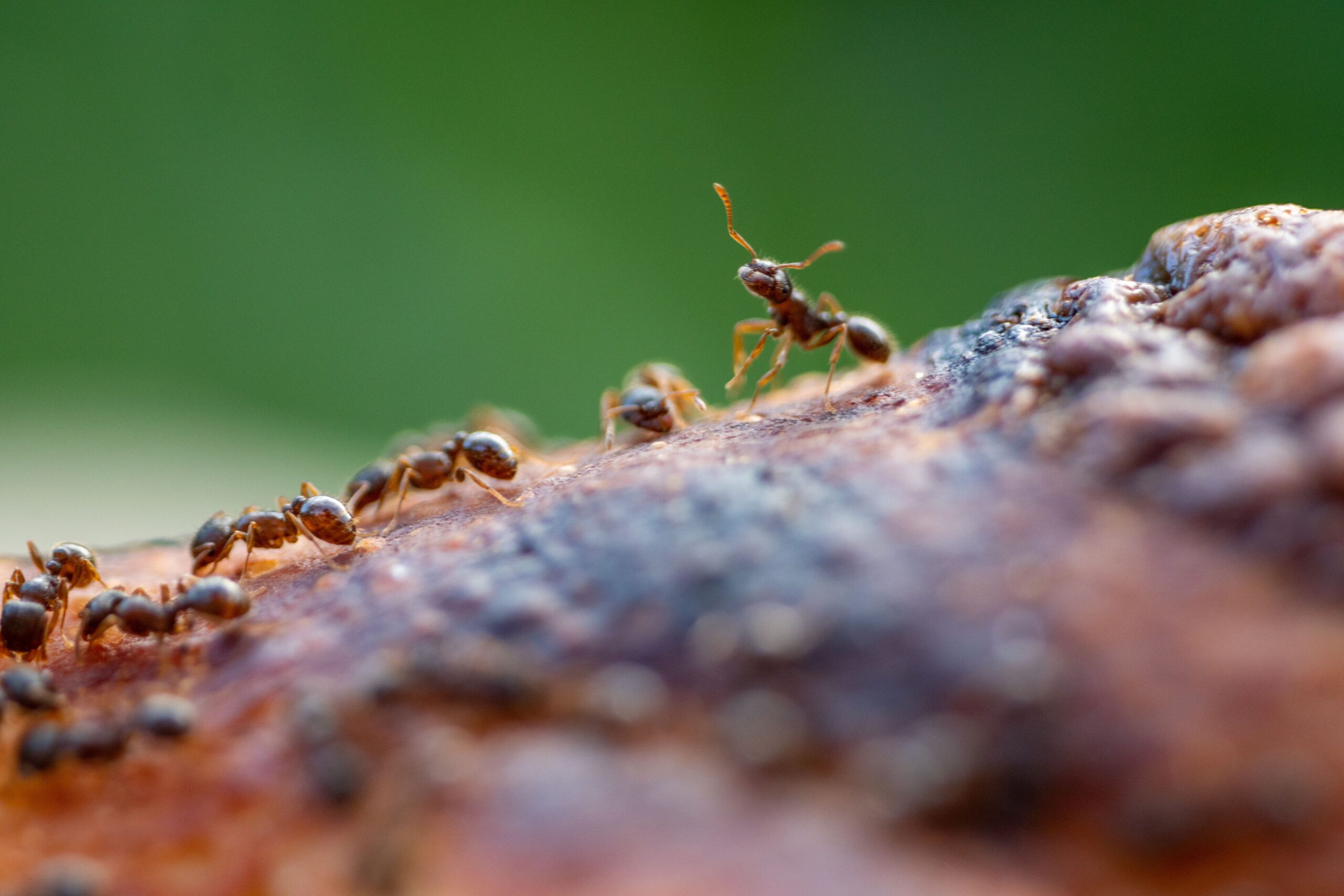
DIY baits and sprays work for small, isolated ant problems. Professional intervention becomes necessary when:
- You see carpenter ant swarmers indoors (indicates an interior nest)
- Ant trails reappear within hours of cleaning or treatment
- You find piles of sawdust (frass) beneath windowsills, baseboards, or in the attic
- Multiple species are present (mixed infestations require different treatment strategies)
- You've treated the problem yourself for more than two weeks without progress
Progressive Pest Management offers same-day service in Winnipeg, Calgary, Brandon, Steinbach, and Selkirk. Our process starts with a free 60-90 minute inspection to identify species, nest locations, and entry points. We provide a written treatment plan with transparent pricing and a 100-day guarantee on most residential services. If covered ants return within the guarantee period, we return at no charge.
Our discreet, unmarked vehicles protect your privacy. Technicians explain where and when treatments are applied, so you know exactly what's happening in your home. We've served Winnipeg homeowners for over 20 years and hold BBB+ accreditation.
What Happens If You Ignore June Ant Infestations
Delaying treatment allows small problems to become structural. Here's what happens over 4-8 weeks:
Week 1-2: Worker ants establish scent trails. A few dozen ants become a few hundred.
Week 3-4: Satellite colonies form inside wall voids. Carpenter ants excavate galleries in window frames, door headers, or roof sheathing.
Week 5-6: Frass (sawdust-like debris) appears beneath damaged wood. Structural integrity begins to decline in affected areas.
Week 7-8: Multiple colonies establish. Treatment costs increase as more entry points, nest sites, and affected zones require attention.
Carpenter ants cause the most damage. A single colony can excavate 10-15 linear feet of galleries in structural lumber over one season. Repairing damaged headers, sills, or roof sheathing costs significantly more than early intervention.
Pharaoh ants pose health risks in kitchens and bathrooms. They're known vectors for staph, salmonella, and strep bacteria. Budding behaviour makes eradication difficult without professional-grade baiting systems.
How Progressive Pest Management Treats June Ant Infestations
Our Integrated Pest Management (IPM) approach combines inspection, treatment, exclusion, and monitoring. Here's what to expect:
Step 1: Free Inspection (60-90 Minutes)
Our technician identifies species, maps ant trails to entry points, uses moisture meters to detect hidden leaks attracting carpenter ants, and inspects outdoor nest sites within 30 meters of your home. You receive a written report with photos and treatment recommendations.
Step 2: Treatment Plan & Guarantee Terms
We provide transparent pricing, explain treatment methods (baiting, perimeter spray, dust applications, or gel placements depending on species), and outline the 100-day guarantee terms. Most residential ant control services qualify.
Step 3: Initial Treatment (1-2 Hours On-Site)
Treatments are tailored by species:
- Carpenter ants: Perimeter spray + dust in wall voids + direct nest treatment if accessible
- Pavement ants: Foundation perimeter treatment + crack-and-crevice application
- Pharaoh ants: Gel baiting inside cabinets, along baseboards, and near appliances (baiting prevents colony budding)
We use discreet unmarked vehicles. Treatments are pet-safe and dry within one hour, per EPA pesticide safety standards.
Step 4: Follow-Up Visit (10-14 Days)
We confirm elimination, adjust bait placements if needed, seal newly discovered entry points, and answer questions about prevention.
Step 5: Ongoing Protection (Optional)
Quarterly or monthly maintenance plans prevent re-infestation. Seasonal treatments target spring ant emergence, summer colony expansion, fall indoor migration, and winter nest sites.
Frequently Asked Questions
Why do I only see ants in June, not other months?
June combines warming soil, spring moisture, and colony reproduction cycles. Outdoor nests become overcrowded, triggering foraging and migration into homes. Ant activity drops in July-August as soil dries and food sources diversify outdoors.
Are the ants I see carpenter ants or pavement ants?
Carpenter ants are large (6-13 mm), black or dark brown, with a single waist node. Pavement ants are smaller (2.5-4 mm), light brown, with parallel grooves on the head. If you're unsure, capture a specimen in a sealed container and text a photo to our team at 204-515-5484 for identification.
Can I use store-bought ant spray to stop the invasion?
Retail sprays kill visible ants but don't reach the nest. Worse, sprays scatter pharaoh ant colonies, causing them to bud into multiple satellite nests. Baiting or perimeter treatments applied by licensed professionals are more effective and longer-lasting.
Will ants damage my home like termites?
Carpenter ants excavate wood but don't consume it. Damage develops over months or years, primarily in moist or rotting lumber. Termites are rare in Winnipeg due to cold winters. If you see wood damage, it's almost always carpenter ants, not termites.
You've identified the problem. Now it's time to stop June ant invasions before they become structural headaches. Progressive Pest Management's 20+ years of experience, BBB+ accreditation, and 100-day guarantee mean you're working with Winnipeg's most trusted residential Pest control team. Our eco-friendly, pet-safe treatments eliminate carpenter, pavement, and pharaoh ants at the source while our discreet service protects your privacy. Book same-day ant control in Winnipeg by calling 204-515-5484 or visiting our contact us page. Don't let a few ants today become a colony in your walls tomorrow.