

Introduction
You pull up to the cabin after a long winter. The door swings open. Stale air hits you first. Then you see them tiny dark pellets scattered across the countertops, the floor, the bedding.
Your first instinct? Grab the broom. Fire up the shop vac. Get this mess cleaned up before the family arrives.
That instinct could put you in the hospital or worse.
Those droppings may carry Hantavirus, a rare but devastating respiratory illness with a fatality rate between 30% and 40% in North America (Manitoba Health, Hantavirus Fact Sheet). Manitoba sits in the heart of the Hantavirus risk zone. The deer mouse, the primary carrier, thrives across the province’s rural landscapes, lakefront properties, and perimeter communities.
Sweeping and vacuuming launch dried particles of infected urine, droppings, and nesting material into the air you breathe. One deep inhalation can change everything-something professionals at Progressive Pest Management see far too often when well-meaning homeowners try to handle rodent contamination themselves.
Here’s what Manitoba cabin owners, cottage goers, and perimeter homeowners who protect themselves properly do differently. They never touch the mess until they understand what they face, and they know exactly when to call a professional.
The Deer Mouse vs. the House Mouse: Winnipeg Residents Need to Know
Not every mouse in your cabin carries Hantavirus. But the one that does looks different from the common house mouse, and knowing the difference matters.
How to Tell Them Apart
The deer mouse (Peromyscus maniculatus):
- Two-toned fur, brown or grey on top, stark white on the belly
- White feet
- Bicoloured tail dark on top, light underneath
- Larger eyes relative to body size
- Prefers rural, wooded, and semi-rural environments
The house mouse (Mus musculus):
- Uniform colour throughout, light brown to grey
- Pinkish-buff feet
- Long, mostly hairless tail in a single colour
- Smaller eyes relative to body size
- Thrives in urban settings, close to human activity year-round
The critical distinction goes beyond appearance. Deer mice carry Sin Nombre virus, the strain responsible for Hantavirus Pulmonary Syndrome (HPS) in North America. House mice do not carry this particular virus.
In Manitoba, deer mice dominate rural and semi-rural areas. They invade cabins, garages, sheds, and lake houses during the fall and winter months. They build nests from shredded insulation, fabric, and paper. They leave droppings and urine throughout the space.
When you open that cabin in spring, the environment inside may contain concentrated viral material from months of undisturbed deer mouse activity. That makes spring opening season the highest-risk period for Hantavirus exposure in Manitoba.
Why Vacuuming and Sweeping Create a Deadly Risk
The Sin Nombre virus survives in dried rodent urine, droppings, and saliva. When you disturb these materials through sweeping, vacuuming, or even just walking through a dusty space, you aerosolize the virus into fine particles.
One breath pulls those particles deep into your lungs.
This airborne transmission route makes Hantavirus fundamentally different from most diseases transmitted by mouse droppings. You don’t need to touch a mouse. You don’t need a bite. You need to breathe contaminated air in an enclosed space.
The Canadian Centre for Occupational Health and Safety (CCOHS) identifies sweeping out barns and other buildings, disturbing rodent-infested areas, and occupying previously vacant dwellings as documented exposure activities linked to Canadian Hantavirus cases.
What Hantavirus Does to You
Manitoba Health describes the progression: symptoms appear between 3 days and 6 weeks after exposure. Early signs mimic those of the flu: fever, headache, muscle aches, nausea, and fatigue. Then, breathing difficulty sets in rapidly as the lungs fill with fluid. The condition escalates into Hantavirus Pulmonary Syndrome.
There exists no cure. No vaccine. No antiviral treatment. Only aggressive supportive medical care in a hospital setting. Even with that care, between 30% and 40% of HPS patients die (Manitoba Health).
The tragedy? Nearly every case traces back to a preventable exposure to rodent waste disturbed by someone without proper precautions.
Cleaning Mouse Droppings Safely: The Step-by-Step Protocol
If you discover droppings in your cabin, garage, or outbuilding, follow this protocol from Manitoba Health and the CCOHS before touching anything.
Step 1: Ventilate the space first. Open all doors and windows. Leave the building for at least 30 minutes. Let fresh air circulate through the entire structure. Do not enter a closed, rodent-contaminated space without ventilation.
Step 2: Gear up properly. Wear rubber or plastic gloves. Wear full-length clothing. If dust cannot realistically stay contained, wear a respirator fitted with N-100 or P-100 filters; a standard dust mask does not provide adequate protection. In heavily infested spaces, add goggles.
Step 3: Soak, never sweep. Mix a disinfectant solution of one part household bleach to nine parts water. Spray all droppings, nesting material, and contaminated surfaces thoroughly. Wait a full 10 minutes. The solution must completely saturate the material to neutralize the virus before you touch it.
Step 4: Wipe never vacuum. Use disposable rags or paper towels to pick up the soaked material. Place everything into sealed plastic bags. Double-bag the waste. Dispose of it in an outdoor rubbish bin immediately.
Step 5: Disinfect all surfaces. After removing the droppings, spray and wipe every affected surface, countertops, floors, shelves, and any items the mice contacted. Steam-clean or launder fabrics, bedding, and soft furnishings that mice may have touched.
Step 6: Remove gloves safely and wash thoroughly. Peel off gloves, place them in a sealed bag, and wash your hands with soap and hot water immediately.
What You Must Never Do
- Never vacuum droppings. Vacuums blast contaminated particles into the air, even with HEPA filters.
- Never sweep dry droppings; brooms create the same airborne dust.
- Never use compressed air to blow debris from surfaces.
- Never handle dead mice with your bare hands. Soak them in a bleach solution first.
When the Job Exceeds Safe DIY: Professional Pest Control Sanitization Winnipeg Services
A few droppings on a countertop in a ventilated room? You can handle that with the protocol above. But many cabin and cottage openings reveal something far worse.
You need professional pest control and sanitization in Winnipeg when:
- Droppings can cover large areas-multiple rooms, attics, or crawl spaces-with heavy accumulations commonly seen in properties that require Commercial pest control rather than basic cleanup.
- Nesting material fills insulation. Deer mice shred fibreglass and cellulose insulation into nests, contaminating the material throughout
- Dead mice sit in enclosed spaces. Decomposing rodents in wall cavities, ductwork, or enclosed storage create concentrated biohazard zones.
- The space remained sealed all winter, with concentrated droppings, urine, and nesting material in an unventilated structure, creating the highest viral load.
- You notice a strong, musty odour. The smell of concentrated rodent urine signals a heavy infestation that demands professional-grade decontamination.
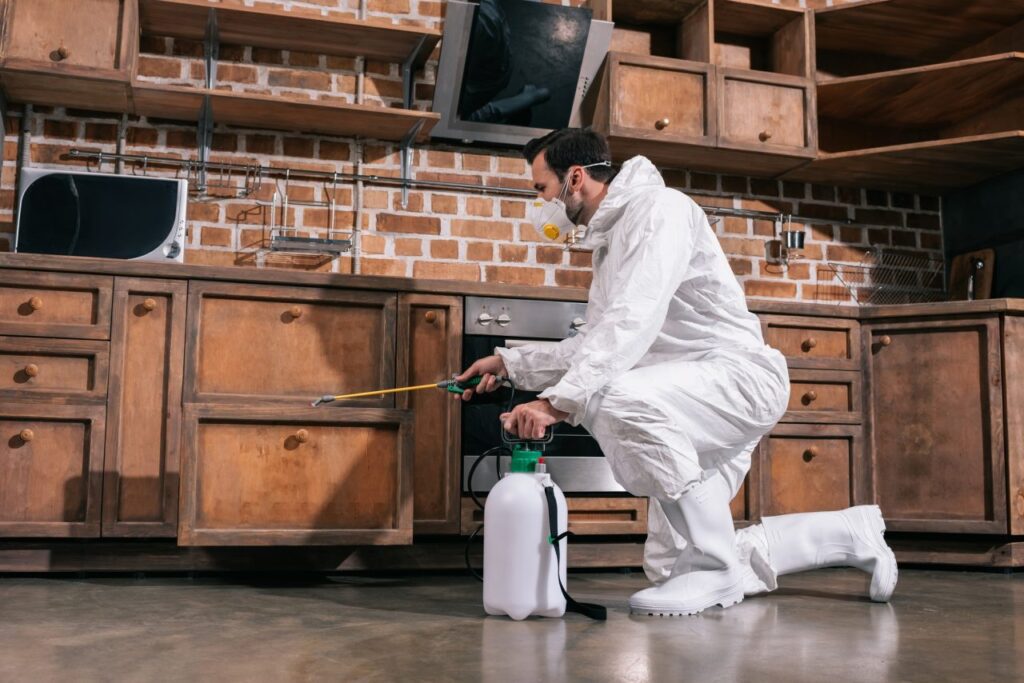
Professional decontamination goes far beyond catching a mouse. The technician removes contaminated insulation, sanitizes structural surfaces, applies hospital-grade disinfectants, and seals entry points to prevent recolonization. They carry the respiratory equipment, containment tools, and biohazard disposal protocols that no homeowner keeps in the garage.
The mousetrap handles the mouse. Decontamination handles the invisible threat the mouse left behind.
Common Mistakes That Put Manitoba Families at Risk
Mistake #1: Treat every mouse the same. The distinction between a deer mouse and a house mouse matters enormously. A house mouse in your city kitchen presents sanitation concerns. A deer mouse in your Whiteshell cabin presents a potential biohazard. Identify the species before you decide on your cleanup approach.
Mistake #2: Opening the cabin and cleaning immediately. Ventilation comes first. Always. Leave the space open for at least 30 minutes. The CCOHS recommends overnight ventilation for severely infested buildings. Rushing in with a broom puts you directly in the path of an airborne virus.
Mistake #3: Assuming a dust mask provides enough protection. Standard paper dust masks do not filter Hantavirus particles. Only N-100- or P-100-rated respirators provide adequate protection in dusty, rodent-contaminated environments (Manitoba Health).
Mistake #4: Cleaning droppings but ignoring insulation and ductwork. Visible droppings represent only part of the contamination. Deer mice nest inside insulation, behind walls, and within ductwork. A surface wipe leaves the deepest contamination untouched, and the Hantavirus risk Manitoba cabin owners face extends to every material the mice occupied.
Mistake #5: Skipping the entry-point seal after cleanup. Decontamination without exclusion invites the next colony. Seal every gap, crack, and opening larger than a pencil’s width. Screen all vents. Install door sweeps. Eliminate the path before the next mouse finds it.
Protect Your Family: Your Action Plan for This Spring
Step 1: Arrive prepared. Pack gloves, bleach, a spray bottle, disposable clothes, sealed bags, and a P-100 respirator before you leave the city.
Step 2: Ventilate before you enter. Open every door and window from the outside. Walk away for 30 minutes minimum.
Step 3: Inspect before you clean. Walk through the space wearing your respirator and gloves. Assess the scope. A few isolated droppings? Follow the safe cleanup protocol yourself. Heavy accumulation, nesting material in the walls, or dead mice in enclosed areas? Stop. Call a professional.
Step 4: Book professional decontamination for heavy infestations. A certified technician removes contaminated material, sanitizes the structure, and seals entry points so you never face this situation again. This service protects your health and restores your cabin to a safe condition.
Step 5: Schedule an annual pre-season inspection. The safest cabin opening starts with a professional check before the family arrives. A quick inspection each spring catches new activity before droppings accumulate and risk escalates.
Key Takeaways:
- Hantavirus risk for Manitoba residents faces peaks during spring cabin openings when dried deer mouse droppings, urine, and nesting material become airborne through sweeping or vacuuming.
- Never vacuum or sweep mouse droppings. Always ventilate first, soak with bleach solution, and wipe with disposable materials.
- Heavy infestations demand professional pest control and sanitization. Winnipeg teams are equipped for biohazard-level decontamination, not a DIY cleanup.
Frequently Asked Questions
Q: What is the Hantavirus risk in Manitoba? A: Manitoba sits within the primary Hantavirus zone in Canada. The deer mouse, the main carrier of Sin Nombre virus, thrives across the province’s rural and semi-rural areas. While cases remain rare, the fatality rate of 30–40% makes every exposure a serious health event. Cabin openings, garage cleanups, and outbuilding maintenance during spring pose the highest risk.
Q: Why should I never vacuum mouse droppings? A: Vacuuming launches dried particles of infected urine, droppings, and nesting material into the air. Inhaling these particles is the primary route of transmission for Hantavirus. Always soak droppings in a bleach solution for 10 minutes, then wipe with disposable cloths.
Q: How do I tell a deer mouse from a house mouse? A: Deer mice have two-toned fur (brown/grey on top, white underneath), white feet, and a bicoloured tail. House mice display uniform grey-brown colouring throughout their bodies. Deer mice prefer rural and semi-rural settings. House mice thrive in urban environments close to human activity.
Q: What diseases come from mice droppings? A: Deer mice can transmit Hantavirus Pulmonary Syndrome, a severe respiratory illness with no cure. Both deer mice and house mice can spread salmonellosis and leptospirosis through contaminated droppings and urine. Proper cleanup protocols protect you from all of these threats.
Q: When should I call a professional instead of cleaning myself? A: Call a professional when droppings cover large areas, nesting material fills insulation or wall cavities, dead mice sit in enclosed spaces, or the structure stays sealed and unventilated for months. These conditions create concentrated biohazard zones that exceed safe DIY cleanup.
Q: How do I prevent deer mice from returning to my cabin? A: Seal every opening larger than a pencil’s width with steel wool or metal flashing. Screen all vents. Install door sweeps on every exterior door. Do not store food in the structure during the off-season. Schedule a professional pre-season inspection each spring.
Your Family Deserves a Safe Cabin Opening. Not a Health Gamble
A shop vac and a dust mask cannot protect you from an invisible virus with a fatality rate above 30%. The droppings you see on the counter only hint at the contamination hidden in the insulation, behind the walls, and inside the ductwork.
Progressive Pest Management provides professional decontamination for Manitoba cabins, cottages, garages, and perimeter homes. Our technicians remove every trace of rodent contamination, sanitize every surface, and seal every entry point so your first breath inside stays safe.
CTA: Book Professional Decontamination Today
Open your cabin with confidence. Let us handle the biohazard.
About the Author
This article was written by the team at Progressive Pest Management, serving Manitoba homeowners, cabin owners, and cottage communities. With specialized training in rodent decontamination, biohazard removal, and exclusion work, Progressive Pest Management helps families across Winnipeg and the surrounding lake country safely open their seasonal properties. Every recommendation in this guide aligns with protocols from Manitoba Health and the Canadian Centre for Occupational Health and Safety.